Cart
0


Diamond Shapes Guide: Find the Cut Style That Speaks to You
The shape of a diamond is the first thing you notice and the last thing you forget. It sets the entire character of a ring romantic, bold, vintage, architectural, timeless. Before you think about carat weight or clarity grade, shape is the decision that defines how the finished ring will look and feel on the hand.
Yet with ten popular shapes to choose from and more variations within each, it is easy to feel overwhelmed. This guide cuts through the noise. You will learn what makes each shape distinctive, who it tends to suit, how each one performs in terms of sparkle and visual size, and what to look for when buying.
There is no objectively best diamond shape. There is only the shape that is right for the person who will wear it every day.

Shape vs Cut: What Is the Difference?
These two terms are often used interchangeably, but they mean entirely different things on a diamond certificate and in conversation with a jeweller.
Shape refers to the outline of the diamond as viewed from above: round, oval, cushion, emerald, and so on. This is what most people mean when they say they want a “round diamond” or a “pear-shaped ring.”
Cut refers to the quality of the faceting how precisely the angles are set, how well-proportioned the stone is, and how effectively it handles and reflects light.
Every shape can be cut well or poorly. A round brilliant can be Excellent cut or it can be too deep, too shallow, or asymmetrical. An oval can be beautifully proportioned or it can have a dramatic bowtie shadow that kills its beauty. Shape and cut are independent variables, and both matter.
In this guide, we focus on shape. For a full explanation of cut quality, proportions, and grading, see our Diamond Cut Guide.

The 10 Most Popular Diamond Shapes
- Round Brilliant
- Oval
- Cushion
- Emerald
- Princess
- Pear
- Marquise
- Asscher
- Radiant
- Heart
1. Round Brilliant
Style: Classic, timeless, universally flattering
Sparkle: Exceptional, the highest of any shape
Visual size per carat: Moderate
Price per carat: Highest of all shapes
Popular with: All hand types, all personal styles
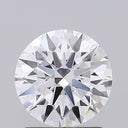
The round brilliant is the most popular diamond shape in the world, and in the UK it accounts for the majority of engagement ring sales. Its 58 facets are arranged to maximise light return, producing the highest brilliance, fire, and scintillation of any cut style. No other shape sparkles quite like a round brilliant.
The round brilliant’s symmetrical outline is universally flattering on all hand sizes and finger lengths, which is part of why it has endured as the most popular choice for over a century. It is the benchmark against which all other shapes are measured.
What to watch: Round brilliants command a price premium over fancy shapes because more rough diamond material is lost during cutting. For a given quality grade, a round will typically cost 20–30% more per carat than an oval or cushion of comparable quality. If budget is a consideration, this is worth factoring in.
2. Oval
Style: Romantic, elegant, elongating
Sparkle: High — brilliant faceting similar to round
Visual size per carat: Excellent — up to 10% larger than round
Price per carat: Moderate — typically 20–25% less than round
Popular with: Shorter fingers, smaller hands, those wanting maximum visual impact
The oval has become one of the most sought-after diamond shapes in the UK over the past five years, and for good reason. Its elongated outline creates the illusion of a longer, more slender finger, its brilliant faceting produces exceptional sparkle, and its greater face-up surface area means it appears larger than a round of the same carat weight.
Ovals are also more cost-effective than rounds. Because less rough material is wasted during cutting, a well-cut oval typically costs meaningfully less per carat than a comparable round brilliant, making it one of the smartest choices for buyers who want maximum visual impact without the round brilliant premium.
What to watch: Ovals are prone to a “bowtie” effect — a dark, bow-tie-shaped shadow across the centre of the stone. Almost all ovals have some degree of bowtie; the question is severity. A well-cut oval will have a minimal, symmetrical bowtie that is barely noticeable. Always view an oval diamond face-up before purchasing.
Ideal length-to-width ratio: 1.30–1.50, with 1.35–1.45 being most popular in the UK.
3. Cushion
Style: Romantic, vintage, soft and feminine
Sparkle: High — large facets produce dramatic flashes
Visual size per carat: Moderate to good
Price per carat: Moderate — typically 25–30% less than round
Popular with: Those drawn to vintage or antique aesthetics, halo settings
The cushion cut is a square or rectangular shape with rounded corners and large, open facets that produce a distinctive, romantic sparkle. It sits somewhere between the round brilliant and the princess cut in character—warmer and softer than the princess, more structured than the round.
Cushion cuts have a long history and carry a distinctly vintage or antique quality that appeals to buyers who want something that feels timeless rather than contemporary. They pair beautifully with halo settings, pavé bands, and yellow or rose gold, which complement their warmth and romantic character.
Two main styles: Cushion brilliant (more traditional sparkle, distinct facet pattern) and cushion modified brilliant, sometimes called “crushed ice” (a more fragmented, scintillating appearance). Both are beautiful; the choice is a matter of personal preference. View both side by side if possible.
Ideal length-to-width ratio: 1.00–1.05 for square, 1.10–1.20 for a more elongated look.
4. Emerald
Style: Architectural, sophisticated, understated luxury
Sparkle: Moderate — step-cut produces “hall of mirrors” effect rather than traditional sparkle
Visual size per carat: Excellent — large face-up surface area
Price per carat: Moderate — typically 25–35% less than round
Popular with: Minimalists, those with an architectural or editorial aesthetic, larger hands
The emerald cut is one of the most distinctive and striking shapes in fine jewellery. Unlike brilliant-cut shapes, the emerald is a step cut; its facets are arranged in parallel rows, creating the famed “hall of mirrors” effect rather than producing the rapid-fire sparkle of a brilliant.
The emerald cut creates long, elegant flashes of light that shift as the stone moves—an effect often described as a hall of mirrors.
The emerald cut is the shape of choice for buyers who want their ring to feel architectural, refined, and deliberately understated. It is unashamedly grown-up. It does not shout; it quietly commands attention.
What to watch: The emerald cut’s open, transparent facets reveal colour and clarity more readily than brilliant cuts. A tint that would be invisible in a cushion or oval becomes more apparent in an emerald. Stay at G colour or above, and aim for VS2 clarity or higher to ensure the stone looks clean face up.
Ideal length-to-width ratio: 1.30–1.50.
5. Princess
Style: Modern, bold, geometric
Sparkle: High — brilliant faceting in a square outline
Visual size per carat: Moderate
Price per carat: Moderate — typically 20–25% less than round
Popular with: Those who want round-level sparkle in a more contemporary, geometric setting
The princess cut is a square shape with brilliant faceting, essentially taking the optical performance of a round brilliant and repackaging it in a clean, modern square outline. It produces excellent sparkle and is the most popular fancy shape for solitaire rings among buyers who want a contemporary look with maximum light return.
Princess cuts are efficient from a rough diamond perspective; the square shape fits naturally into the octahedral rough crystal, losing less material than a round. This contributes to their competitive price point relative to rounds.
What to watch: The four corners of a princess cut are sharp and can be vulnerable to chipping with everyday wear. Always ensure the setting protects all four corners—a four-prong setting where each prong sits on a corner is the standard approach. Avoid bezel settings that expose the corners.
Ideal length-to-width ratio: 1.00–1.05 to maintain the square appearance.
6. Pear
Style: Dramatic, feminine, distinctive
Sparkle: High — brilliant faceting
Visual size per carat: Excellent — elongated outline reads large on the finger
Price per carat: Moderate — typically 20–30% less than round
Popular with: Those who want something distinctive and fashion-forward, shorter fingers
The pear is a teardrop-shaped diamond, one rounded end and one pointed end. It combines the sparkle of a round brilliant with an elongated silhouette that creates a striking, dramatic effect on the hand. Worn with the point towards the fingertip, the pear creates the illusion of longer, more slender fingers.
The pear is one of the more fashion-forward shapes. It has a long history in fine jewellery but is currently enjoying a strong resurgence in popularity in the UK, driven partly by high-profile celebrity sightings. It works beautifully as a solitaire, with a halo, and in east-west orientations for a more architectural look.
What to watch: Symmetry is critical in a pear diamond. The two shoulders (the curved sides) should mirror images of each other, and the point should align precisely with the apex of the rounded end. Any asymmetry is highly visible once you know to look for it. Pears are also prone to the bowtie effect; always evaluate face-up.
Ideal length-to-width ratio: 1.45–1.75, with the point protected by a V-shaped or claw prong.
7. Marquise
Style: Dramatic, maximalist, bold
Sparkle: High — brilliant faceting
Visual size per carat: Outstanding — the largest face-up appearance of any shape
Price per carat: Moderate — typically 20–30% less than round
Popular with: Those who want maximum visual impact, vintage sensibility
The marquise is an elongated shape with two pointed ends reminiscent of a pointed oval or a boat hull. It is the shape that delivers the greatest face-up surface area per carat of any cut style, meaning a 1-carat marquise will look noticeably larger on the finger than a 1-carat round brilliant.
The marquise has roots in 18th-century French jewellery and carries a distinctly vintage, courtly character. It is experiencing a genuine renaissance in the UK at the moment, particularly in yellow gold solitaire settings that lean into its antique sensibility.
What to watch: Like pear and oval diamonds, the marquise is prone to a bowtie effect. Both pointed ends must be protected by the setting — V-shaped prongs are standard. Symmetry between the two points is essential; view the stone face-up to assess whether the two sides are true mirror images.
Ideal length-to-width ratio: 1.85–2.10.
8. Asscher
Style: Art Deco, vintage, deeply architectural
Sparkle: Moderate — step-cut, similar to emerald but square
Visual size per carat: Smaller — deep pavilion hides weight
Price per carat: Moderate — typically 25–30% less than round
Popular with: Art Deco enthusiasts, vintage jewellery lovers, those with larger hands
The Asscher cut is essentially a square emerald cut with more cropped corners, giving it an almost octagonal silhouette. Like the emerald, it is a step cut producing dramatic, rectangular flashes of light rather than the rapid sparkle of a brilliant. The Asscher has a deeply geometric, almost hypnotic quality; its concentric squares of light are unlike anything produced by a brilliant-cut shape.
The Asscher is named after the Asscher Brothers of Amsterdam, who developed the original cut in 1902. It is closely associated with the Art Deco movement and carries an unmistakable vintage grandeur. It suits buyers who want their ring to feel like an heirloom.
What to watch: Like the emerald cut, the Asscher’s transparent step facets reveal colour and clarity readily. Aim for G colour or above and VS2 clarity or higher. The deep pavilion also means the Asscher appears smaller face-up than other shapes of the same carat weight, so factor this into your size expectations.
9. Radiant
Style: Versatile, vibrant, modern-meets-vintage
Sparkle: Very high — brilliant faceting in a rectangular outline
Visual size per carat: Good
Price per carat: Moderate — typically 20–25% less than round
Popular with: Those who love the emerald shape but want more sparkle, three-stone settings
The radiant cut combines the rectangular or square outline of the emerald or Asscher with brilliant faceting underneath. The result is a shape that has the clean, geometric silhouette of a step cut but the dazzling light performance of a brilliant. It is one of the most versatile fancy shapes — it reads as architectural without sacrificing sparkle.
Radiants work particularly well in three-stone settings, where their rectangular outline pairs beautifully with trapezoidal or half-moon side stones. They also suit east-west solitaire settings and modern tension-set designs.
Ideal length-to-width ratio: 1.00–1.05 for square, 1.20–1.40 for a rectangular look.
10. Heart
Style: Romantic, sentimental, bold statement
Sparkle: High — brilliant faceting
Visual size per carat: Good — elongated face-up outline
Price per carat: Moderate — typically 20–25% less than round
Popular with: Those who want their ring to be unmistakably romantic and personal
The heart-shaped diamond is the most overtly romantic of all cut styles. It is essentially a pear cut with a cleft at the top, creating the unmistakable heart silhouette. Heart diamonds produce excellent sparkle thanks to their brilliant faceting, and they make a genuinely striking solitaire for buyers who want a ring that wears its sentiment openly.
Heart diamonds are less common than other shapes, which means they attract attention and stand apart from the standard solitaire. They require careful cutting to achieve symmetry; the two lobes must be identical and the cleft well-defined.
What to watch: Symmetry is everything in a heart diamond. The two lobes should be perfectly matched in width and curvature, and the cleft should be clearly defined. In smaller carat weights (under 0.80 ct), the heart shape can become difficult to distinguish; aim for at least 0.90 ct for the shape to read clearly.
Ideal length-to-width ratio: 0.95–1.05 for a well-proportioned heart.
Diamond Shape Comparison at a Glance
| Shape | Sparkle | Visual Size | Price vs Round | Best For |
|---|---|---|---|---|
| Round | Exceptional | Moderate | Benchmark | Everyone — the safe, brilliant choice |
| Oval | High | Excellent | −20–25% | Maximum visual impact, shorter fingers |
| Cushion | High | Moderate | −25–30% | Vintage romance, halo settings |
| Emerald | Moderate | Excellent | −25–35% | Understated elegance, architectural style |
| Princess | High | Moderate | −20–25% | Modern solitaire, geometric taste |
| Pear | High | Excellent | −20–30% | Distinctive style, fashion-forward |
| Marquise | High | Outstanding | −20–30% | Maximum size per carat, bold statement |
| Asscher | Moderate | Small | −25–30% | Art Deco, vintage heirloom aesthetic |
| Radiant | Very High | Good | −20–25% | Geometric look with brilliant sparkle |
| Heart | High | Good | −20–25% | Overt romance, personal statement |
How to Match Diamond Shape to Hand Size and Finger Length
The right shape for a ring is partly about personal taste and partly about proportions. A shape that looks breathtaking in isolation can feel overwhelming on a petite hand, or underwhelming on a larger one. Here is a practical framework:
Shorter Fingers (Sizes D–H)
Elongated shapes create the illusion of length and make the finger appear more slender. The best shapes for shorter fingers are:
Oval the most effective elongating shape
Pear (worn point-out towards the fingertip)
Marquise (worn lengthways)
Emerald (particularly rectangular ratios of 1.40+)
Avoid very wide square shapes (princess, Asscher) in large carat weights, which can visually shorten the finger.
Longer Fingers (Sizes L–P and above)
Longer fingers can carry a wider range of shapes confidently. Shapes that might feel too wide on a shorter finger look beautifully balanced on a longer one:
Round brilliant at 1.25 ct and above
Cushion cut, particularly square ratios
Princess cut
Asscher cut the square proportions suit longer fingers well
Radiant cut
Smaller Hands (Petite)
On a smaller hand, a given carat weight appears larger. Petite hands suit slightly more modest carat weights in brilliant shapes. A 0.75–1.00 ct oval or round will look generous and proportional on a small hand. Very large stones can look disproportionate.
Larger Hands
Larger hands benefit from shapes with greater face-up surface area, which means the diamond reads clearly from a normal viewing distance. Ovals, emeralds, radiants, and cushions above 1.25 ct all look confident and proportional on larger hands.
Setting Styles That Work Best for Each Shape
The setting you choose can enhance a shape’s strengths, protect its vulnerabilities, and completely change the overall character of the ring. Here is a quick reference:
| Shape | Best Setting Styles |
|---|---|
| Round | Solitaire (four or six prong), halo, pavé band, bezel works with everything |
| Oval | Four-prong solitaire, halo, east-west bezel for a modern look |
| Cushion | Halo (classic pairing), four-prong solitaire, pavé band |
| Emerald | Simple four-prong solitaire, three-stone with baguette sides, east-west bezel |
| Princess | Four-prong corner-set solitaire (essential for corner protection), channel set band |
| Pear | Three-prong with V-tip, halo, east-west solitaire for a modern take |
| Marquise | Five-prong with V-tips on both points, halo, simple solitaire |
| Asscher | Four-prong solitaire, Art Deco–inspired milgrain settings, three-stone |
| Radiant | Four-prong solitaire, three-stone with trapezoid sides, halo |
| Heart | Three-prong with V-tip at point, bezel, simple cathedral solitaire |
Trending Diamond Shapes in the UK Right Now
Shape preferences shift over time, and the UK market has its own distinct tastes. Here is what we are seeing across our Hatton Garden showroom and online collections in 2026:
Oval : The Dominant Trend
The oval has been the fastest-growing shape in the UK for the past three years and shows no sign of slowing. Its combination of visual size advantage, finger-elongating silhouette, brilliant sparkle, and lower price per carat than round make it compelling from every angle. Worn in yellow gold with a simple four-prong setting, it has become the defining engagement ring aesthetic of this era.
Emerald : The Quiet Luxury Choice
The emerald cut has grown significantly in popularity among buyers who associate quality with restraint rather than spectacle. Its architectural clarity and understated elegance align with the broader quiet luxury trend that has reshaped fashion and interiors across the UK. We are seeing emerald cuts increasingly paired with plain platinum or white gold bands nothing to distract from the stone.
Marquise : The Resurgent Statement
After decades on the periphery, the marquise is genuinely back. Its dramatic elongated silhouette and outstanding face-up size make it particularly appealing to buyers who want a ring that turns heads. Yellow gold settings have been central to its revival.
Pear : The Fashion-Forward Option
The pear has been given a significant boost by celebrity ring culture and continues to attract buyers who want something distinctive. East-west pear settings where the stone sits horizontally across the finger rather than lengthways have become a particularly popular contemporary take.
Round : Still the Mainstay
Despite the growth of fancy shapes, the round brilliant remains the most purchased shape in the UK by a considerable margin. Its timeless quality, exceptional sparkle, and universal flattery mean it will never go out of style. For buyers who want to be certain their choice will look as relevant in 40 years as it does today, the round is still the answer.
Find the Shape That Feels Right
The best diamond shape is the one that the person wearing it loves and loves every day. It might be the one everyone expects, or the one that surprises everyone who sees it. Both are the right answer.
At Rings of UK, our team in Hatton Garden is here to help you explore shapes in person, compare stones side by side, and make the decision with complete confidence. We also offer detailed video consultations for buyers across the UK who cannot visit us in London.
Frequently Asked Questions About Diamond Shapes
Which diamond shape is best for an engagement ring?
The best diamond shape depends on personal style. Round diamonds offer maximum sparkle, while oval, cushion, princess, and emerald cuts are popular for their unique elegance and modern appeal.
What is the most popular diamond shape in the UK?
The round brilliant remains the most popular shape overall, accounting for roughly half of all engagement ring sales. Among fancy shapes, the oval has overtaken the cushion and princess as the most requested, driven by its elongating effect on the finger and its excellent value relative to round brilliants.
Which diamond shape looks biggest?
The marquise produces the largest face-up appearance per carat of any shape, followed by the oval and the pear. All three are elongated shapes that distribute their weight across a larger surface area. The emerald also has a large face-up appearance due to its open table. The Asscher and princess tend to look smaller face-up because more of their weight is concentrated in the pavilion depth.
Which diamond shape is the most affordable?
Fancy shapes are generally 20 to 35 per cent less expensive per carat than round brilliants because less rough material is lost during cutting. Among fancy shapes, emerald, cushion, and radiant cuts often represent the best value. Lab-grown diamonds in any fancy shape can reduce the price further still often by 50 to 70 per cent compared to natural diamonds of the same quality.
Does diamond shape affect sparkle?
Yes, significantly. Shapes with brilliant faceting (round, oval, cushion, princess, pear, marquise, radiant, heart) produce the most sparkle. Step-cut shapes (emerald, Asscher) produce a different, more dramatic flash of light rather than the rapid fire sparkle of brilliant cuts. Neither is better they are genuinely different aesthetics. If maximum sparkle is the priority, choose a brilliant-cut shape. If you prefer a more refined, architectural light effect, step cuts are the answer.
Which shape is best for small hands?
Elongated shapes oval, pear, and marquise tend to be most flattering on smaller hands with shorter fingers, as they create the visual impression of length and slenderness. The oval in particular is widely recommended for petite hands. Very wide square shapes in larger carat weights can overwhelm a small hand.
Which diamond shape is the most timeless?
The round brilliant has been the most popular engagement ring shape for over a century and shows no signs of that changing. If timelessness is the priority, the round is the safest choice. That said, the emerald cut and cushion cut have both been popular for well over 80 years and are genuinely enduring shapes in their own right. The shapes most likely to feel dated in 20 years are those most tied to a specific contemporary trend.
Can I change the shape of a diamond later?
No. A diamond’s shape is determined during the cutting process and cannot be changed without re-cutting the stone which would reduce its carat weight significantly and is rarely practical or cost-effective. The setting, however, can be remade. If you love the stone but want a different look over time, you can have it reset in a new design without replacing the diamond.
What shape diamond has the best resale value?
Round brilliant diamonds consistently hold the strongest resale value because they represent the largest and most liquid market. Fancy shapes particularly ovals and cushions have improved significantly in resale value as their popularity has grown. Niche shapes like heart and marquise tend to have more limited resale markets. If resale is a consideration, the round brilliant is the safest long-term choice.